Laravel
Query builder
PHP autodoc-laravel recognizes your query builder methods and uses them to accurately document your API responses and TypeScript types.
Example
return response()->json(
    Planet::select('id', 'diameter')
        ->with('spaceStations:id,name')
        ->where('has_rings', true)
        ->get()
);
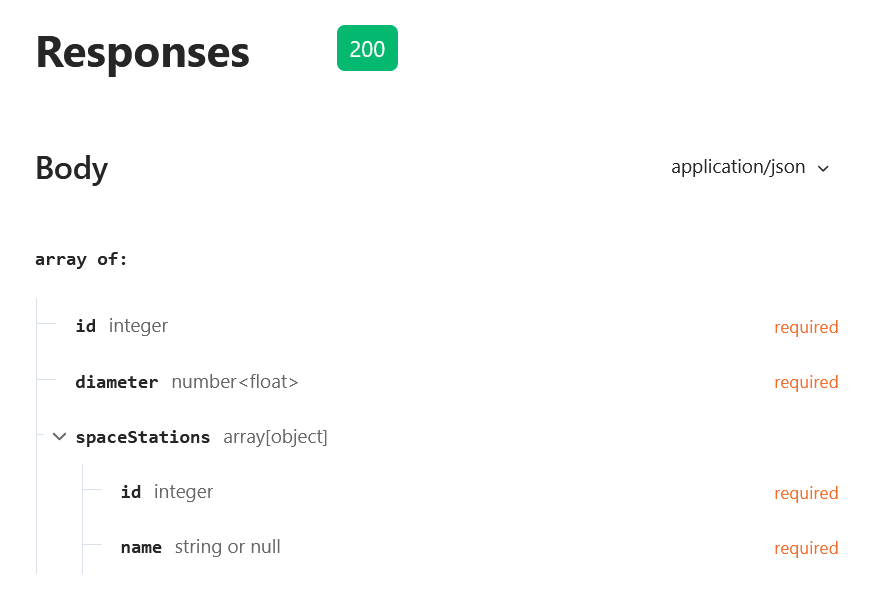
By default, autodoc-laravel skips unknown or dynamic methods in a query chain. To stop analyzing any chain that contains one, set laravel.abandon_query_builder_parsing_on_unknown_methods to true.
Supported methods
Result shapes are inferred for these chain-ending methods:
all, avg, average, count, create, doesntExist, exists, find, findOrFail, first, firstOrCreate, firstOrFail, firstOrNew, firstWhere, get, paginate, pluck, sum, updateOrCreate
How result types are inferred:
select,addSelectand column lists passed toget([...])narrow the resulting shape to the selected columns, including aliases.- Eager-loaded relations from
with(...)are resolved into nested shapes - see Eloquent models for the relation requirements. findandfindOrFailreturn a collection when the key argument is array-like, a single model otherwise.- Scalar methods use fixed return types:
countreturns a non-negative integer;existsanddoesntExist, a boolean;sum, a number; andavgandaverage, a number ornull. Static model calls such asPlanet::sum('diameter')use the same types.
Pagination
paginate() resolves to the full LengthAwarePaginator JSON shape - data items typed from the query, plus current_page, last_page, per_page, total, from, to, links and the page URL fields. The page query parameter is added to the documented route automatically, and a custom page name passed to paginate() is honored:
return response()->json(
    Rocket::paginate(100)
);
Raw queries
Chains rooted in the DB facade (DB::table(...), DB::query()) can contain subqueries, unions and raw expressions, so no row shape is inferred for them. They still resolve usefully:
getandpluckreturn a collection, so chained collection methods with callbacks keep working.- The scalar finishers listed above return their fixed types.
Database transactions
DB::transaction(...) resolves to the return type of its callback, which is analyzed like any other closure:
$order = DB::transaction(function () {
    // ...

    return Order::create([...]);
});